Skip to content

Security lights: four, and the three dials that matter

Lumens are the advertised figure and the least important one. What decides whether a security light works is where its sensor looks, how wide its beam spreads, how short its on-time is set, and whether the color is one the neighbors will tolerate.

Four settings decide whether a security light is useful, and only one of them is on the box.

Detection range and angle

The figure that decides where the light goes. A 10 m (33 ft) sensor covers a normal drive from a house wall and does not cover a long one — and all four lights in this guide publish it, from 10 to 21 m (33 to 69 ft).

Beam angle over lumens

Lumens describe total output; beam angle decides where it lands. A narrow 3,000 lm beam is a bright stripe with dark edges. For seeing what happens across a yard, wide beats bright.

On-time

As short as is useful. A minute is plenty. Ten minutes means the light is on most of the night and has stopped being a signal.

Color

3000 K looks like a house. 6500 K looks like industrial equipment and generates complaints. If a camera watches the same area, neutral light renders it better.

And aim the sensor across the approach, not down it.

Which device does your home need?

You want deterrence
Lighting is among the cheapest and most effective measures available.
You want to see who is there
Light plus a camera, because a camera without light records very little.
You have close neighbors
Aim and shielding matter, because light trespass causes real disputes.
You have no power at the spot
Solar lights exist and their winter performance is the thing to be realistic about.

Picking by what you are protecting

Approaches and paths

Where lighting both deters and prevents falls, which is a benefit people forget.

Supporting cameras

Where light does more for night footage than any camera upgrade.

Deterrence

Where a light that comes on suddenly is startling, and where that startle is the point.

Dark corners

Where shadow provides cover, and where a modest light removes it entirely.

What actually protects, and what is noise

Where the light falls
Aim matters more than output. A well-aimed modest light beats a powerful one pointed at the sky.
Motion sensor adjustment
Sensitivity, range and duration all need setting. A light that triggers on cats all night gets switched off.
Mains or solar
Mains is consistent; solar is convenient and struggles in winter. The choice usually depends on whether power exists at all.
Light trespass
A light shining into a neighbor's bedroom causes disputes and, in some places, complaints with legal weight.
Warm-up and dwell time
A light that stays on for five minutes after a cat walks past is a light that annoys everyone including you.

Which figure for which entrance

Your goalThe lightThe setting
DeterrenceA motion-triggered lightAimed at the approach
Camera supportSteady or triggered lightAvoid glare into the lens
No power availableA solar lightWinter is the test
Close neighborsShielded and aimed downLight trespass matters

Where this is usually botched

Aiming light into a neighbor's window
It causes genuine disputes and in some places formal complaints. Aiming down and shielding solves it entirely.
Pointing a light at your own camera
The camera adjusts to the light and everything else goes black. Light the scene, not the lens.
Leaving sensitivity at maximum
Cats, foxes and passing cars all trigger it. A light that is always on stops being a signal that anything happened.
Assuming solar works everywhere
A solar light in shade, in winter, does very little. It is a power decision as much as a lighting one.

By the home you have

The security-minded householder
Uses lighting first, because it is cheap, effective and helps everything else work.
The camera owner
Uses lighting to make night footage usable, which no camera setting can do on its own.
The terrace dweller
Needs shielded, well-aimed lighting because neighbors are close on all sides.

Batteries, updates and working life

Security lights fail at their sensors more than their lamps. A PIR window covered in cobwebs, dust or frost either stops detecting or triggers constantly, and both look like a fault in the light itself.

  • Clean the PIR sensor window; cobwebs are the leading cause of erratic behavior.
  • Check the aim after storms and seasonal growth.
  • Clean solar panels, which lose output quickly when dirty.
  • Replace units rather than fitting brighter lamps than the fitting is rated for.

Safety

Electricity outdoors and light affecting others.

  • Have mains lighting installed by someone competent; outdoor wiring has its own rules.
  • Aim and shield lights so they do not trespass onto neighboring property.
  • Avoid dazzling anyone approaching, including yourself and delivery drivers.
  • Work safely at height when installing or adjusting.

The choices, and what settled them

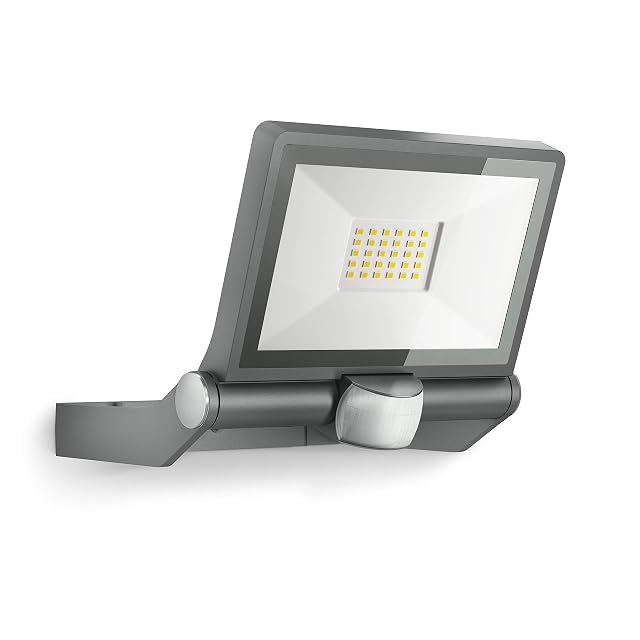
  1. Steinel XLED ONE S

    18.6 W · 2,050 lm · 3000 K · 180° sensor to 12 m (39 ft) · panel and sensor swivel 180°

    Steinel states 2,050 lumens from 18.6 watts at 3000 K, with a 180 degree infrared sensor reaching 12 meters (39 ft), and both the LED panel and the sensor swivelling through 180 degrees.

    Best for: A house wall where the light must look right as well as work — 3000 K is warm rather than clinical.

    7.5/10

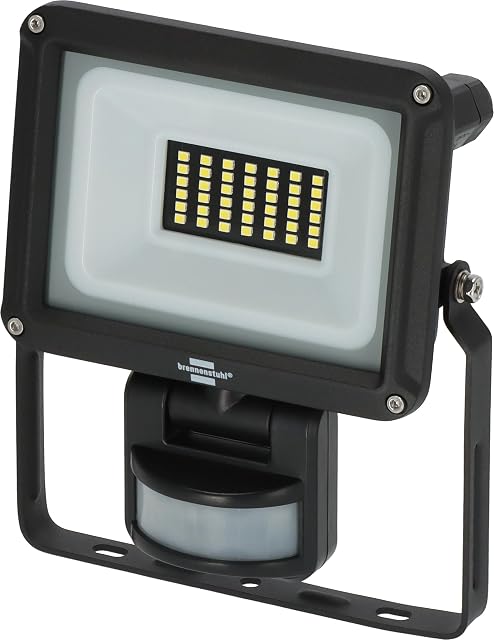
  2. Brennenstuhl JARO 3060 P

    20 W · 10 m (33 ft) detection, adjustable sensitivity · Everlight SMD LEDs · tool-free spring terminals

    Brennenstuhl states 2,300 lumens, a 10 meter (32.8 ft) detection range with adjustable sensitivity, named Everlight SMD emitters, and spring terminals that need no tools to wire.

    Best for: Anybody wiring the light themselves — the tool-free terminals genuinely change the job.

    7.5/10

    ≈ $100

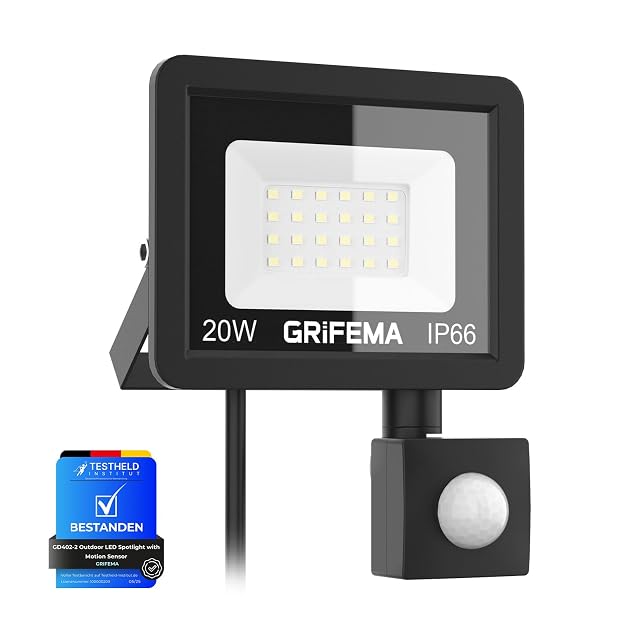
  3. GRIFEMA GD402-2

    20 W · 2,200 lm · 6500 K · IP66 · adjustable SENS, TIME and LUX

    A 20 W motion floodlight at 2,200 lumens and 6500 K, rated IP66, with three separate adjustments: sensitivity, on-time and the ambient light level below which it will trigger.

    Best for: A first security light where the three adjustment dials matter more than the brand.

    6.9/10

The questions we are asked

Which setting do people get wrong?

The daylight threshold. Wound to its most sensitive, the light triggers in daylight — wasting energy, annoying the household and wearing out a lamp that should have been resting. Set it so the light only works after dusk.

Warm or cool white?

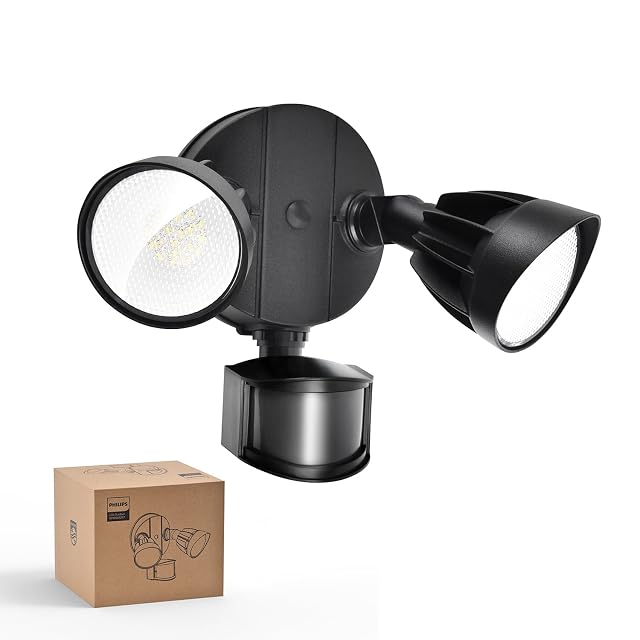
Warm, on the front of a house. A 6500 K light is effective and looks like a parking lot, and a light that gets disconnected after complaints protects nothing. A neutral light, like the Philips at 5000 K, renders colors better for a camera watching the same area, which is the one argument against going warmest.

Does security lighting actually deter?

It is among the cheapest and most effective measures. Sudden light removes cover and surprise, and both matter to an opportunist.

Should the light be on all night or motion-triggered?

Motion-triggered is more startling and uses less power; constant light is better for camera footage. Many households use both in different places.

Will it help my camera?

Considerably. Light does more for night footage than any camera upgrade, provided it lights the scene rather than shining into the lens.

How do I stop it triggering on animals?

Reduce sensitivity, narrow the detection area and angle the sensor down. A light that is always on has stopped signaling anything.

Are solar security lights any good?

In a sunny position, for modest output, yes. In shade or in winter they disappoint, and that is a power problem rather than a lighting one.

Can a light annoy my neighbors?

Easily, and light trespass causes real disputes. Aiming down and using shielding avoids almost all of it.

Each device, and the door it watches

Steinel XLED ONE S

Designed for: A house wall where the light must look right as well as work — 3000 K is warm rather than clinical.

Its main asset: 3000 K warm white, like the XLED Home 2 S: the only two lights here that do not look like a parking lot

Its main gap: 2,050 lm is lower than the Philips at similar power

Read the full review →

Brennenstuhl JARO 3060 P · $100

Designed for: Anybody wiring the light themselves — the tool-free terminals genuinely change the job.

Its main asset: Detection range published: 10 m (33 ft), with sensitivity adjustment

Its main gap: More expensive than the unbranded lights here

Read the full review →

GRIFEMA GD402-2

Designed for: A first security light where the three adjustment dials matter more than the brand.

Its main asset: Three separate adjustments — sensitivity, time and daylight threshold

Its main gap: 6500 K is a harsh, blue-white light that neighbors notice

Read the full review →

The short decision

Comparisons that matter here

Device against device, already covered, inside this guide or this aisle.

What this comparison is built on

The devices listed are drawn from the catalog of this site. Specifications are those the maker and the Amazon listing publish; prices are what Keepa recorded on the date shown, and both move. The order follows declared specifications, the balance between stated strengths and stated limits, and price. No device here has been installed or tested by us, and no page claims it was.

Last checked on

Prices quoted in these summaries are dated readings. The live price is shown next to each product.

The tool we use ourselves

Chosen your tool? Now buy it at the right price.

Cameras, alarm kits and safes swing by thirty dollars or more across the year, and the biggest "discounts" often land at prices the same model sold for six weeks earlier. UniverTrack tracks the real price history across retailers, spots fake reductions, and alerts you when it is genuinely the moment to buy.

Real price historyBuy-now alertsAI buying assistant
Try free for 14 days →
No commitment · Cancel in one click · 5 languages